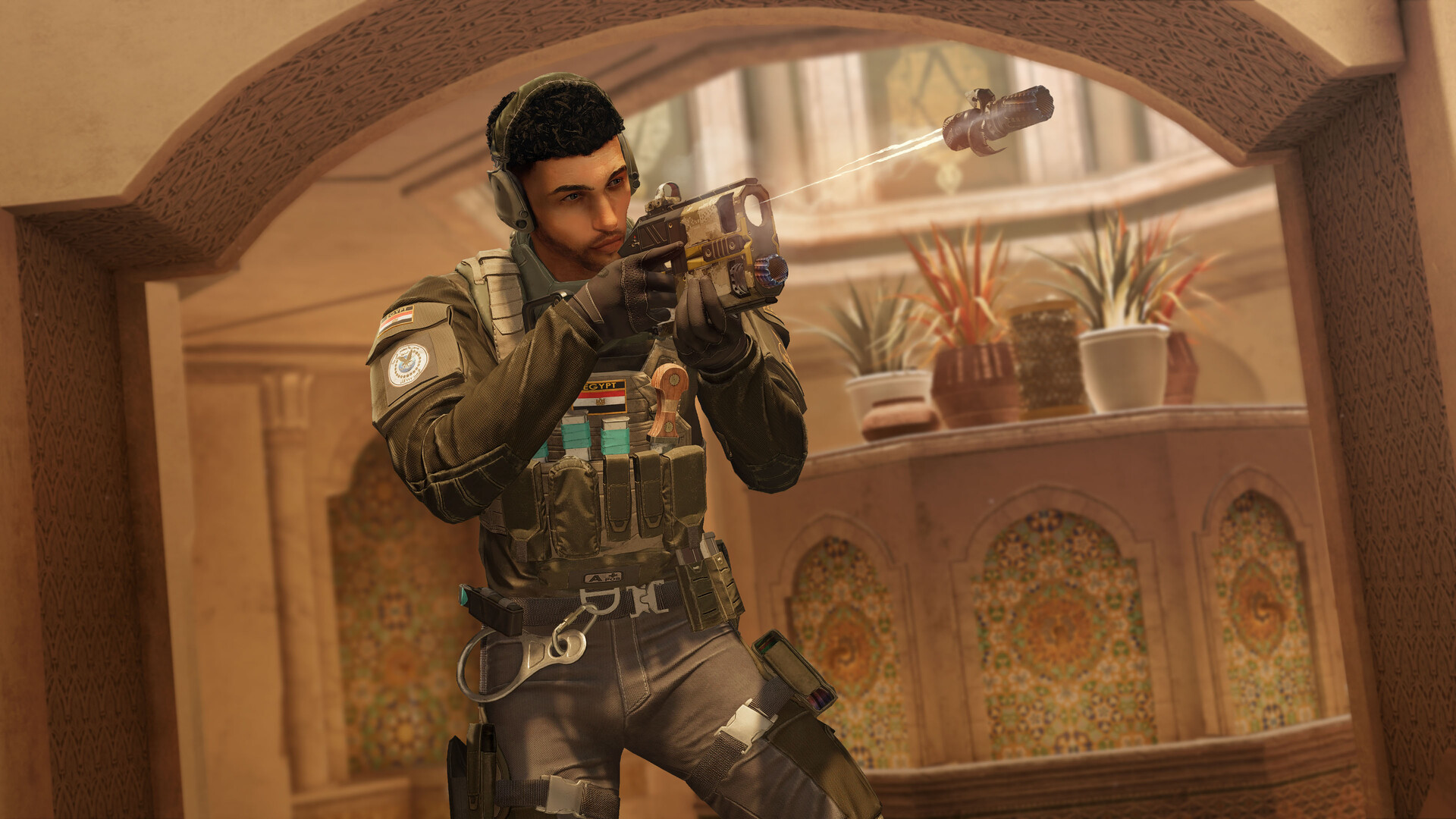
Reinforce your sightlines, Gamers! Ubisoft's tactical shooter powerhouse, Tom Clancy's Rainbow Six Siege, continues to reign supreme in the competitive esports arena. Defined by destructive wall-breaching mechanics, lethal operator gadgets, and millisecond-sensitive gunplay, achieving rock-solid frame pacing and ultra-low input latency is essential to ranking up from Copper to Champion.
With Ubisoft transitioning the engine pipeline to modern DirectX 12, the game leverages modern multi-threaded CPU architectures and GPU shader capabilities better than ever. Below is the full official breakdown of Rainbow Six Siege PC system requirements, 144Hz/240Hz/360Hz esports hardware tiers, and pro competitive optimization settings.
⚡ Instant Esports Benchmark: Can Your PC Run Rainbow Six Siege?
Test your gaming laptop, budget rig, or custom esports battlestation instantly with our real-time hardware simulator:
🔥 Check Can I Run It? — Instant Rig & FPS Tester →Rainbow Six Siege — Official PC System Requirements
| Hardware Component | Minimum (1080p / 60 FPS / Low Preset) | Recommended (1080p / 144+ FPS / High Preset) |
|---|---|---|
| Operating System | Windows 10 / Windows 11 (64-bit) | Windows 11 (64-bit with latest updates) |
| Processor (CPU) | AMD Ryzen 3 3100 / Intel Core i3-8100 | AMD Ryzen 5 3600 / Intel Core i5-10400 (or Ryzen 5 5600) |
| Memory (RAM) | 8 GB RAM | 16 GB Dual-Channel RAM (Eliminates 1% low frame drops) |
| Graphics Card (GPU) | NVIDIA GTX 1650 4GB / AMD RX 5500 XT 4GB / Intel Arc A380 6GB | NVIDIA RTX 2060 6GB / AMD Radeon RX 6600 8GB |
| DirectX Version | DirectX 12 API | DirectX 12 API |
| Storage Space | 65 GB available space (SSD Recommended) | 65 GB SSD space (High-speed round map loading) |
| Anti-Cheat & Network | BattlEye Anti-Cheat + Broadband Connection | BattlEye Anti-Cheat + Low Ping Wired Ethernet |
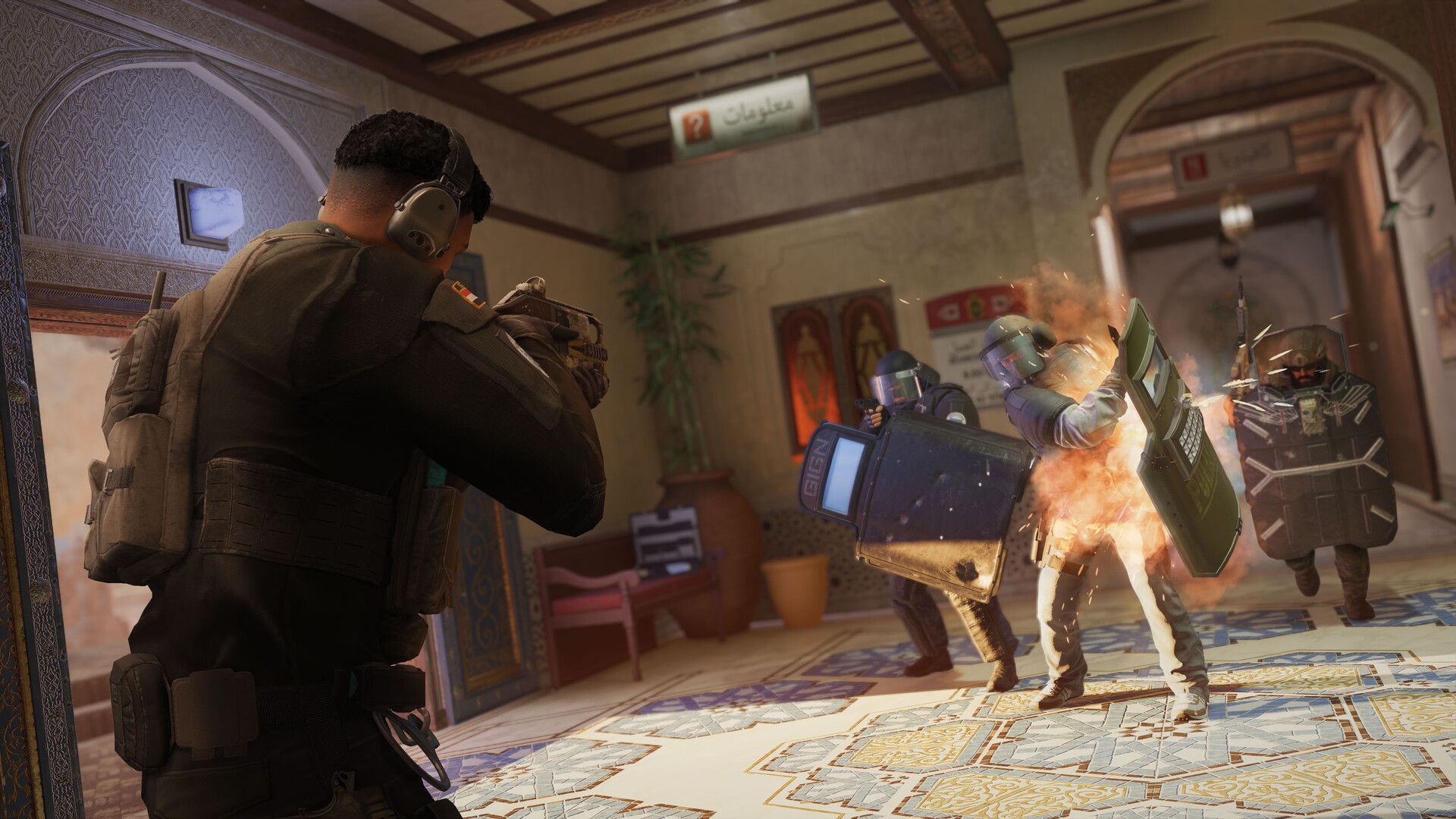
Competitive Esports Hardware Tiers (144Hz, 240Hz & 360Hz)
To maximize your peeker's advantage and tracking precision on competitive high-refresh gaming displays, here is the hardware required to maintain unwavering triple-digit framerates:
| Target Refresh Rate | Processor (CPU) | Graphics Card (GPU) | Expected Performance |
|---|---|---|---|
| 1080p @ 144Hz (Competitive Entry) | Intel Core i5-10400F / AMD Ryzen 5 3600 | GTX 1660 Super / RTX 3050 / Radeon RX 6600 | Locked 144 - 180 FPS |
| 1080p / 1440p @ 240Hz (Ranked Grinder) | Intel Core i5-13400F / AMD Ryzen 5 5600X / 5700X3D | RTX 3060 Ti / RTX 4060 / Radeon RX 6700 XT | Locked 240+ FPS / Low Latency |
| 1440p @ 360Hz+ / 4K Esports Pro | Intel Core i7-14700K / AMD Ryzen 7 7800X3D | RTX 4070 Super / RTX 4080 / Radeon RX 7800 XT | 360+ FPS / Sub-5ms Input Delay |
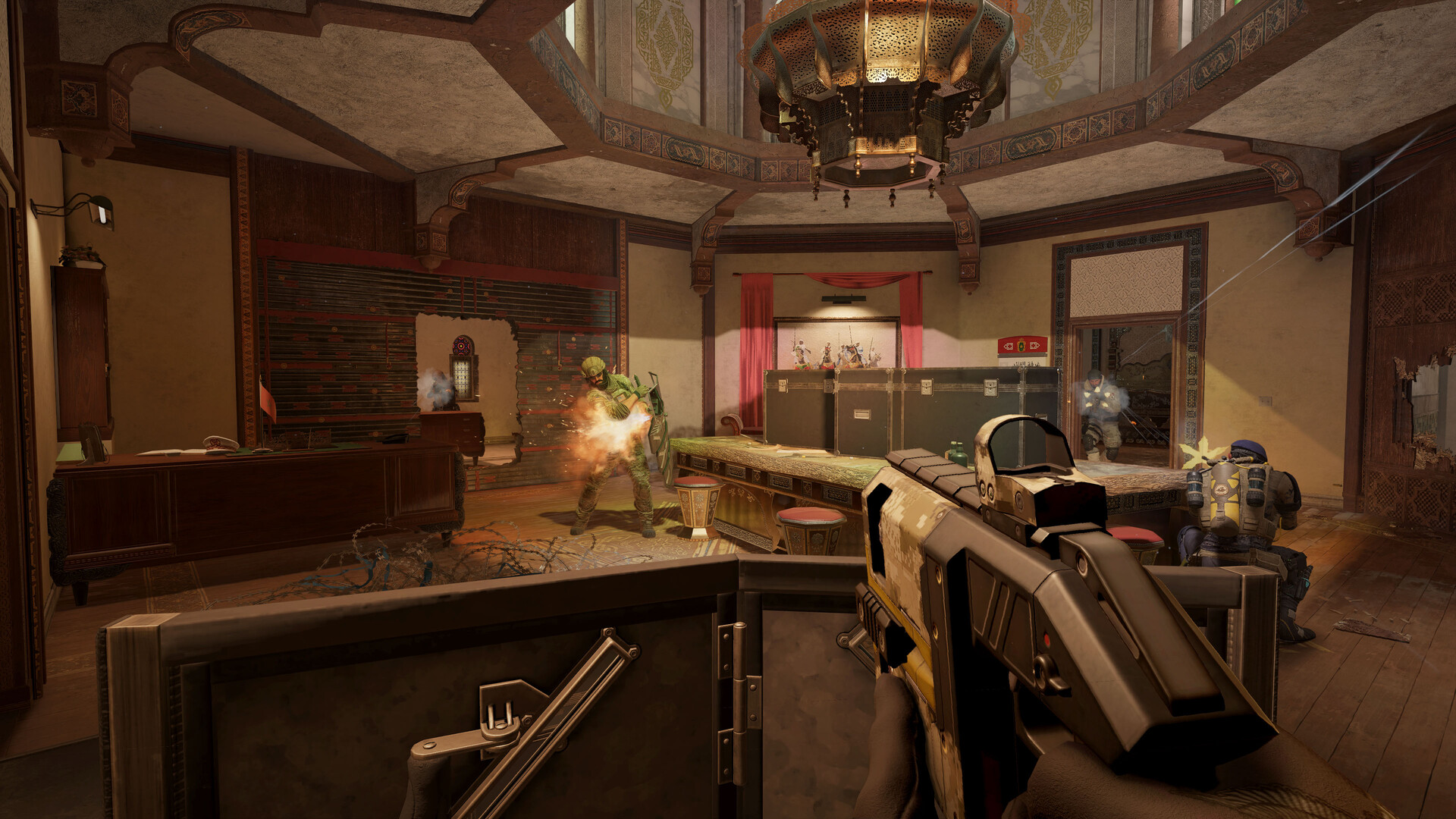
Pro Competitive Optimization: Best Graphics & Latency Settings
Used by top competitive pro league players, these settings give you the maximum competitive sightline advantage while maintaining the lowest click-to-photon latency:
- Shadow Quality: Set to Medium. Never set Shadows to Low—Medium enables real-time dynamic player shadows, allowing you to see enemy operator shadows around corners before they swing!
- NVIDIA Reflex Low Latency: Set to On + Boost to minimize GPU render queue lag and prevent GPU-bound input delays.
- LOD (Level of Detail) Quality: Set to Ultra. This prevents long-distance operator models and head silhouettes from morphing into low-poly meshes across long hallways.
- Ambient Occlusion & Lens Effects: Turn OFF. These cinematic settings add visual clutter and darken shadowy corners where defenders might hide.
- Anti-Aliasing (T-AA): Set to T-AA-2X or standard T-AA with Render Scaling at 100% and T-AA Sharpness at 50% to 70% for crystal-clear pixel angles without blur.
0 comments:
Post a Comment